
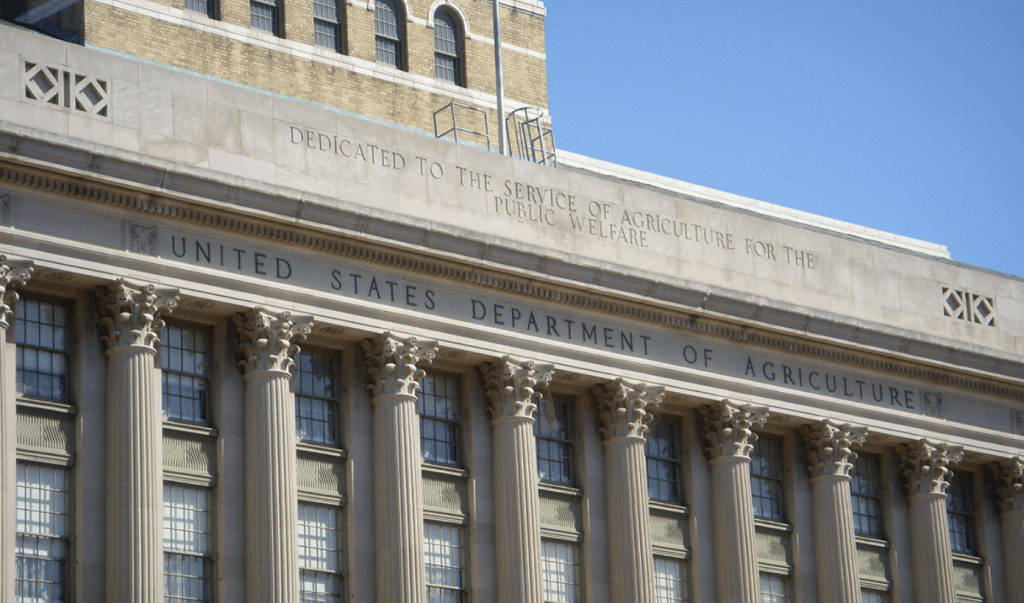
Full Committee Hearing: Senate Committee on Agriculture, Nutrition, and Forestry
Summary:
On July 24th, 2025, the United States Department of Agriculture released Secretary Memorandum: SM 1079-015, known as the Department of Agriculture Reorganization Plan. The plan closes most regional offices and moves roughly 2,600 employees out of the National Capital Region to centralize operations through 5 regional hubs: Raleigh, North Carolina; Kansas City, Missouri; Indianapolis, Indiana; Fort Collins, Colorado; and Salt Lake City, Utah.
Background:
Members of Congress were informed of the existence of the USDA reorganization plan just mere minutes before its publication. Currently, 90% of the USDA workforce operates through the regional offices and fieldwork, with only 10% operating in the National Capital Region. The Deputy Secretary’s main justification for these moves is to have USDA employees working closer to rural customers, in addition to the high cost of living in the National Capital Region as compared to the low federal salary locality rates in the new hub regions.
Not only the physical offices, but also program structuring, will significantly change under this plan. A few notable examples are civil rights functions, the Freedom of Information Act, the Office of Budget and Program Analysis, the Office of the Chief Financial Officer, and tribal relations functions as individualized by mission areas which will all be consolidated. Furthermore, the Office of Small and Disadvantaged Business will be reduced to a single position that “focuses on statutory requirements.” In regard to both civil rights and tribal relations, the memorandum also referenced delivering the “statutory requirements.”
The Deputy Secretary is in charge of the implementation of this plan and “may make changes of adjustments to the plan as needed.” While “Congressional notifications” are referenced in the memo, there are no mentions of Congressional, or stakeholder, consultations.
Analysis:
The sudden release of this plan without consultation from Congress has spurred frustrations on both sides of the aisle, as was clear at the Full Committee Hearing for the Review of the USDA Reorganization Proposal on July 30th, 2025. Not only were Senators expressing concern over the lack of consultation itself, but also the ambiguity of the plan released, as several Senators did not know whether the regional offices or research centers in their state would be closed. There is also a notable lack of a clear timeline for this process. When Senators argued against any portion of the plan, the Deputy Secretary stated that releasing the Secretary Memorandum was the “first step of many,” and that they could speak on the issue at a later meeting if requested. He claimed the plan could be altered on his authority following a 30-day consultation period that began the day the Secretary Memorandum was released on July 24th.
The relocation of the 2,600 employees in Washington D.C., and the proposed locations of the regional hubs, were hotly debated by Senate Democrats. Ranking Member Senator Amy Klobuchar emphasized the importance of having federal workers in the so-called “room where it happens” to fight on behalf of rural Americans when voicing her frustrations. The Deputy Secretary pointed to the prevalence of telework in Capitol offices in an attempt to claim that few employees actually work in person anyway. He also declared that the retention rate for these relocated employees would be very high, as people would see the financial benefits of the lower cost of living in hub cities. In retort, Democrats highlighted statistics from 2019 when a smaller Trump Administration reorganization of the Economic Research Service (ERA) and the National Institute of Food and Agriculture (NIFA) saw a 50% loss in employees, meaning a 50% loss in talent and experience. Republicans and Democrats alike took issue with the location of these regional hubs. California Senator Adam Schiff pointed out that the hub locations selected do not include even 1 of the top 5 states for agricultural production, of which California is 1st in the nation, alluding to the possibility that this decision was spurred by political revenge more so than the claimed argument of the high cost of living in the state.
When Democrats pressed for more details on the financial breakdown of the estimated 4.4 billion dollars in savings, minimal were offered. On the subject of voluntary retirements and the Deferred Resignation plan, Democrats called attention to the 15,364 employees that have already quit and taken the payout deal under the impression that the alternative was to be imminently fired, including in regional offices. The cost of moving and rehiring employees, in addition to the repairs needed for buildings to accommodate this influx of workers, was not expanded upon.
Impacts:
Democrats continually pressed the Deputy Secretary for impact assessments, but none had been initiated or completed. Analyses on the effects of cuts to SNAPs and WIC, as well as the effects of the relocation of employees within disadvantaged groups, were requested and denied. Senator Raphael Warnock of Georgia pressed for answers about the impact on employees of color, citing the previous USDA relocation of the National Institute of Food and Agriculture that resulted in a 65% decline in black staffers, according to the GAO. The Deputy Secretary responded, “Senator, you have my word that everything we do will not be based on race.” Overall, the Deputy Secretary gave no reassurance that any impact assessments would be conducted during the consultation period or before the implementation of this proposed plan.
It can be assumed, based on previous relocations within the USDA by the Trump Administration in 2019, that this reorganization plan will see a disproportionate impact on disadvantaged groups both in terms of constituents and employees. Research, including key reports and insights into diseases that threaten crops, livestock, and humans alike, will likely see declines in efficiency and production. There are major concerns regarding weakened advocacy for these rural farmers in Washington, D.C., and a weakened quality of customer service.
Recommendations:
Members of Congress must coalesce with the members of the House Committee on Agriculture and the Committee on Ways and Means to analyze the financial impact of this plan. This should include constituent consultations, speaking with farmers and USDA workers to gauge their opinions and preferences. Additionally, it should be noted that there is no proposed hub location for the Northeast region. Members of Congress should advocate for an additional or substitute regional hub to be placed in Pennsylvania, which is ranked higher as an agricultural producer compared to Utah. They should also advocate for the Utah regional office to be moved to the state of California to support the state’s immense contribution to American agriculture.
 Erin Czelusniak
Leave a comment